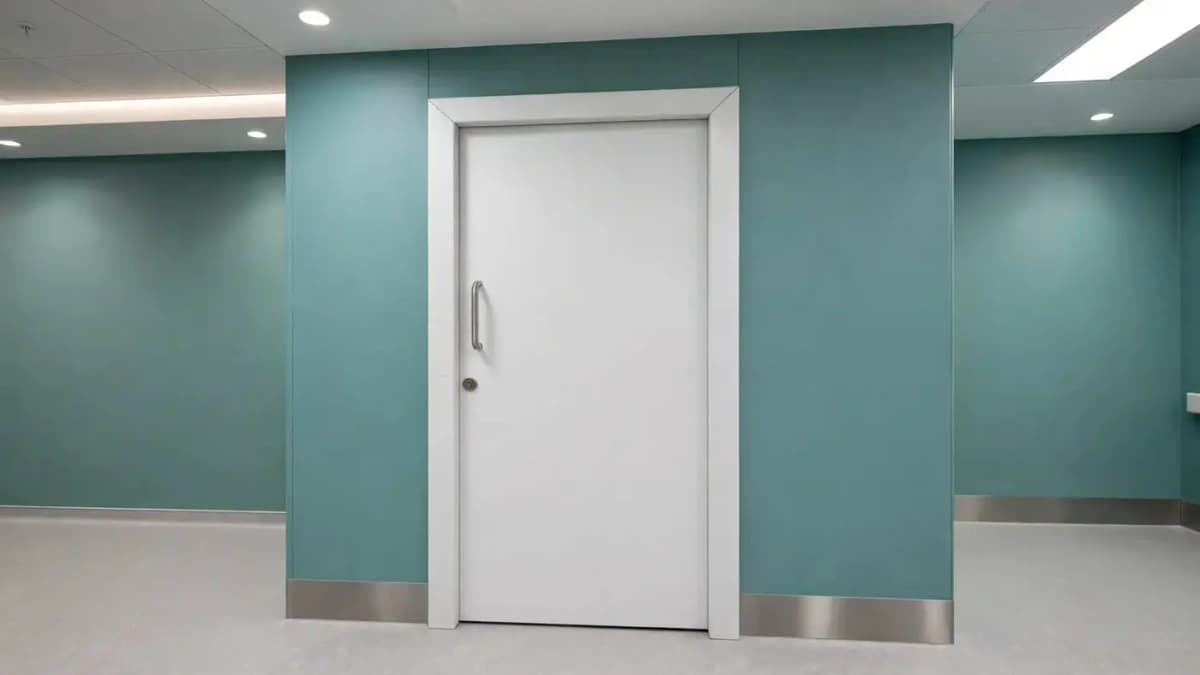
Healthcare Doors
Egis RadGuard X3S
Lead-lined hinged X-ray door with up to 3 mm lead equivalence — radiation protection in the swing format.
Lead-lined hinged swing door for X-ray rooms, CT suites and mammography, with up to 3 mm lead equivalence and AERB-compliant shielding continuity.
Overview
Not every shielded room needs a sliding door. The RadGuard X3S is the hinged answer to the same radiation-safety brief as the RadGuard X3 slider: a lead-lined swing door that keeps diagnostic X-ray, CT and mammography rooms compliant with AERB shielding requirements, in the familiar swing format that suits smaller rooms and retrofit openings where a sliding track cannot go.
The 70 mm leaf carries a continuous lead sheet — up to 3 mm lead equivalence — overlapped at the frame with lead-lined architraves, so there is no unshielded gap at the jambs, head or threshold. A lead-glass vision window, with lead equivalence matched to the leaf, preserves staff sightlines into the room. Heavy-duty shielded hinges carry the lead-loaded leaf without sagging, and the closer is sized for the real leaf weight, not a catalogue guess.
Egis engineers the X3S to the room's shielding report: share the modality, workload and required lead equivalence, and the door is built to match — then installed so the shielding runs continuous from wall to leaf. Clear openings run from 900 to 1200 mm wide and 2100 to 2400 mm high in powder-coated steel or stainless finishes. For wide equipment-transfer openings or hands-free operation, the RadGuard X3 sliding version covers the same brief.
How shielding continuity is guaranteed
Radiation shielding fails at the edges, not in the middle. A lead-lined leaf is straightforward; the hard part is the perimeter, where the lead in the leaf must meet the lead in the wall without a gap. The X3S overlaps the leaf's lead sheet with lead-lined architraves at the jambs, head and threshold, so the shielding plane continues across the frame. The lead-glass vision window is specified to the same lead equivalence as the leaf — a plain window would be a hole in the shield.
The second engineering problem is weight. Lead is dense, and a lead-loaded leaf will defeat ordinary hinges and closers within months — sagging, dragging, and eventually leaving gaps at the frame. The X3S uses heavy-duty shielded hinges rated for the loaded leaf and a closer sized to the real mass, with a door-closed proving output that the room's exposure circuits use to inhibit tube energisation while the door is open.
- Up to 3 mm lead equivalence, matched to the room's shielding report
- Continuous lead sheet overlapped at the frame — no unshielded perimeter gaps
- Lead-lined architraves at jambs, head and threshold
- Lead-glass vision window matched to leaf equivalence
- Heavy-duty shielded hinges and weight-rated closer for the lead-loaded leaf
- Door-closed proving output interlocks with X-ray exposure circuits
Applications
X-ray rooms
Hinged format suits smaller diagnostic rooms and retrofit openings where sliding tracks cannot fit.
CT suites
Matched lead equivalence keeps the suite compliant with the approved shielding design.
Mammography rooms
Compact swing format with lead-glass sightlines for staff supervision.
Dental CBCT and veterinary imaging
The same shielding discipline, scaled to smaller rooms and lower-equivalence briefs.
In detail
Frequently asked questions
Lead equivalence is determined by the room's shielding design, which accounts for the equipment's workload, energy, room layout and occupancy of adjacent areas. In India this design is prepared under AERB guidelines, typically by the equipment supplier's physicist or the project's radiation safety officer. The RadGuard X3S is available up to 3 mm Pb equivalence to match that design — Egis builds the door to the specified value.
AERB regulates the X-ray installation as a whole, including room shielding. The door is part of the shielded envelope and its lead equivalence must match the approved shielding design. Egis provides the door's shielding specification and test documentation for inclusion in the facility's licensing submissions.
Not with hinges engineered for the load. Ordinary hinges fail under lead weight; the X3S uses heavy-duty shielded hinges rated for the loaded leaf, plus a closer sized to the real mass. The maintenance schedule covers hinge and closer checks like any clinical door.
Yes. The vision window is lead glass with lead equivalence matched to the leaf — it is not a plain lite. Staff keep their sightlines into the room without creating a hole in the shield.
Yes. The door provides a door-closed proving output that the room's warning and exposure circuits use to inhibit tube energisation while the door is open — standard practice in radiation suite design.
Choose the X3S for smaller rooms, retrofit openings and budgets that favour swing hardware. Choose the sliding RadGuard X3 for wide equipment-transfer openings or where hands-free automatic operation is required.
Related door systems
Healthcare Doors
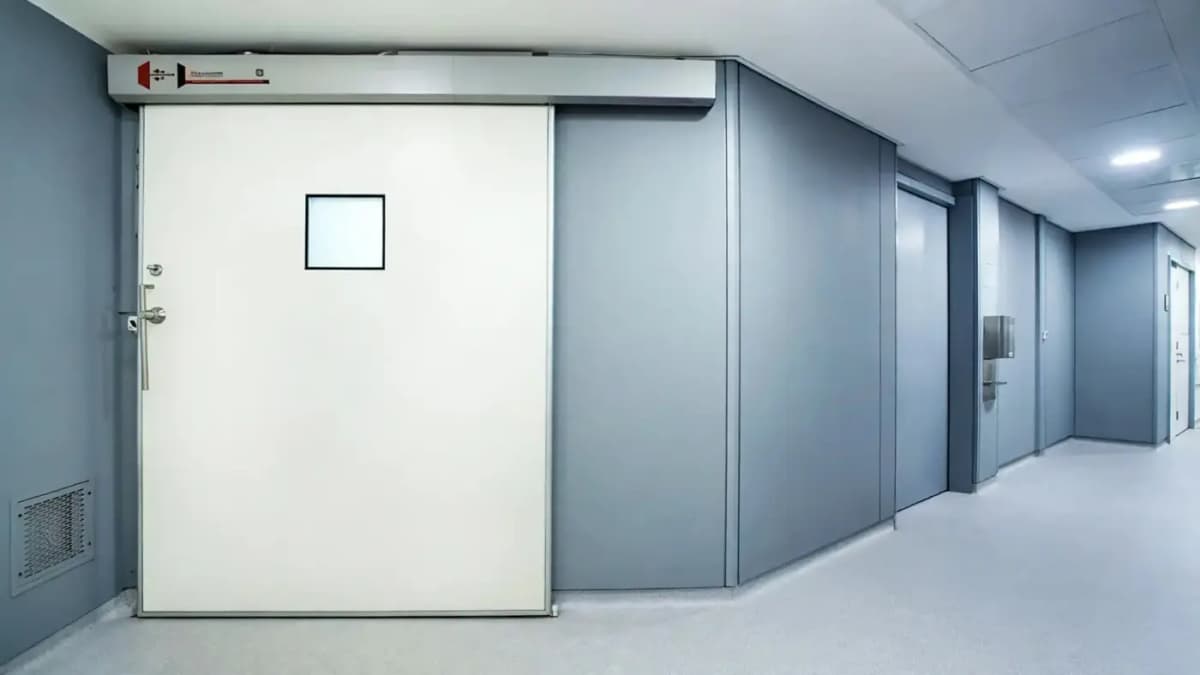
Egis RadGuard X3
- Sliding door system
- Airtight sealing
- Radiation-proof
- Completely smooth finishing
Lead-lined hermetic sliding door for X-ray rooms, cath labs and radiotherapy bunkers, with up to 3 mm lead equivalence and airtight sealing.
View specifications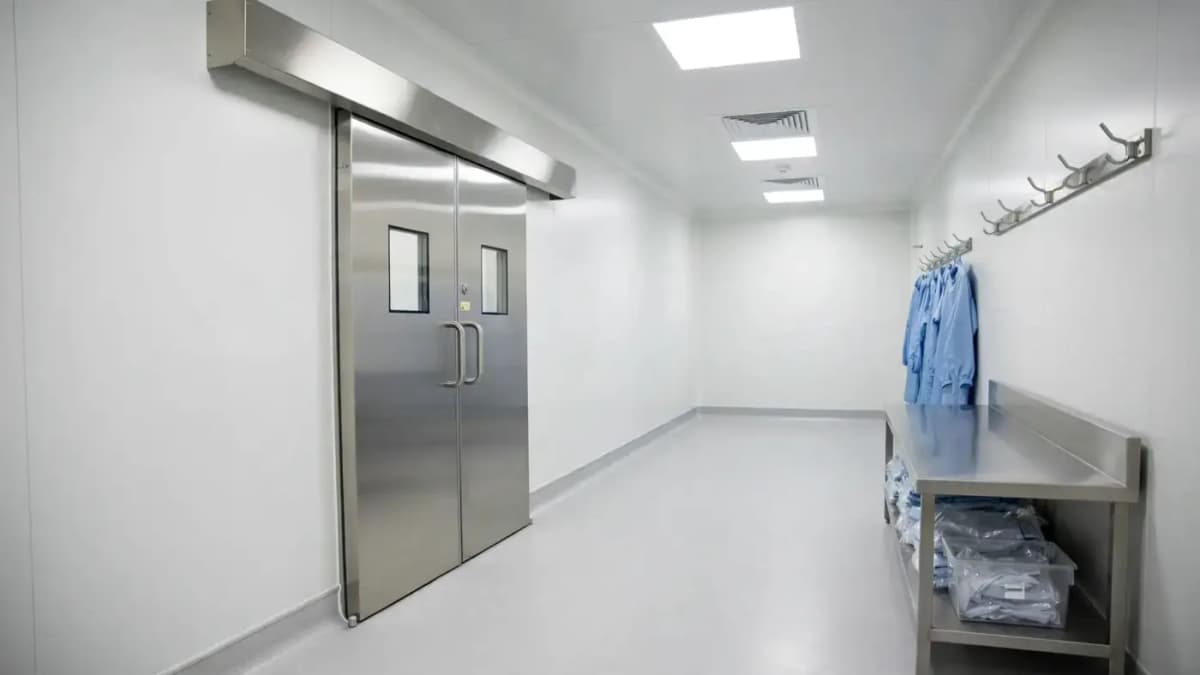
Healthcare Doors
Egis HermaSeal S200 Pro
- Sliding door system
- Airtight sealing
- Completely smooth finishing
- Water-resistant
Full stainless-steel hermetic sliding door for operating rooms and isolation areas that demand maximum hygiene and chemical resistance.
View specifications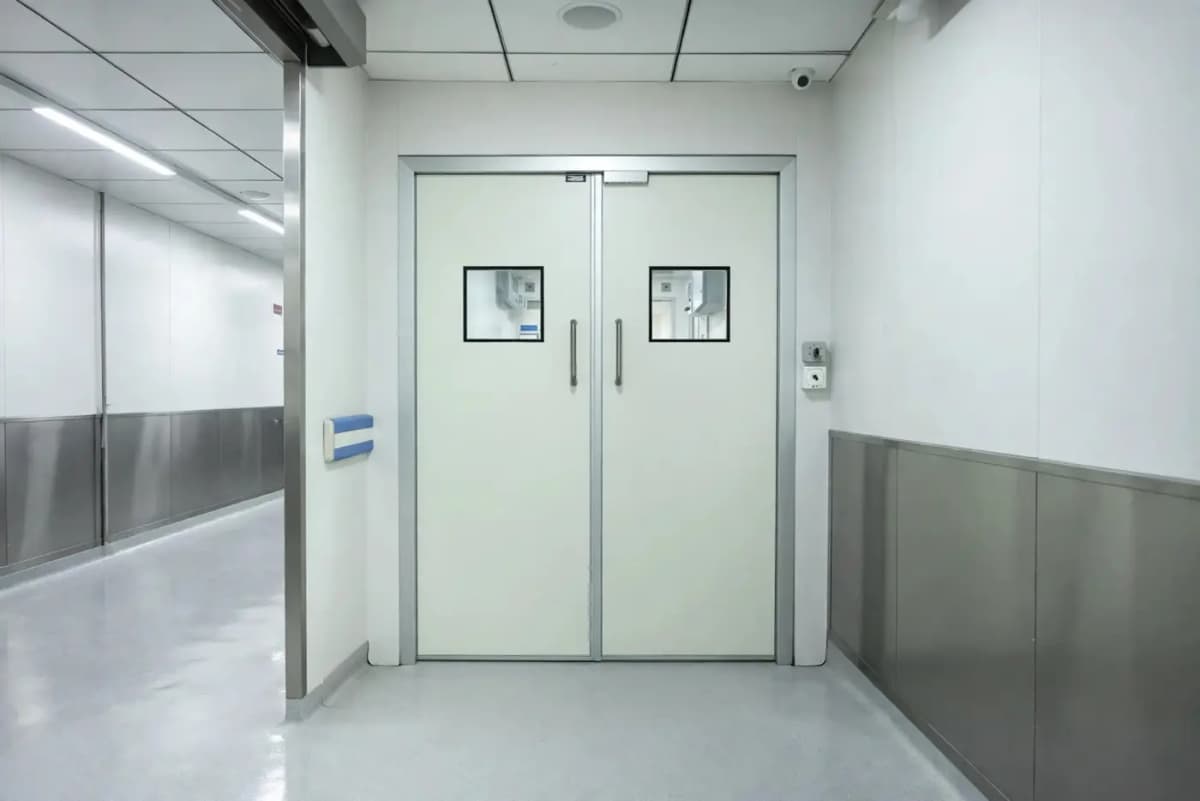
Life-Science / Clean-Room Doors
Egis PureSwing P60
- Hinged door system
- Airtight sealing
- Completely smooth finishing
Single-leaf hygienic hinged door for clean rooms and laboratories, with flush surfaces and sealed edges throughout.
View specifications