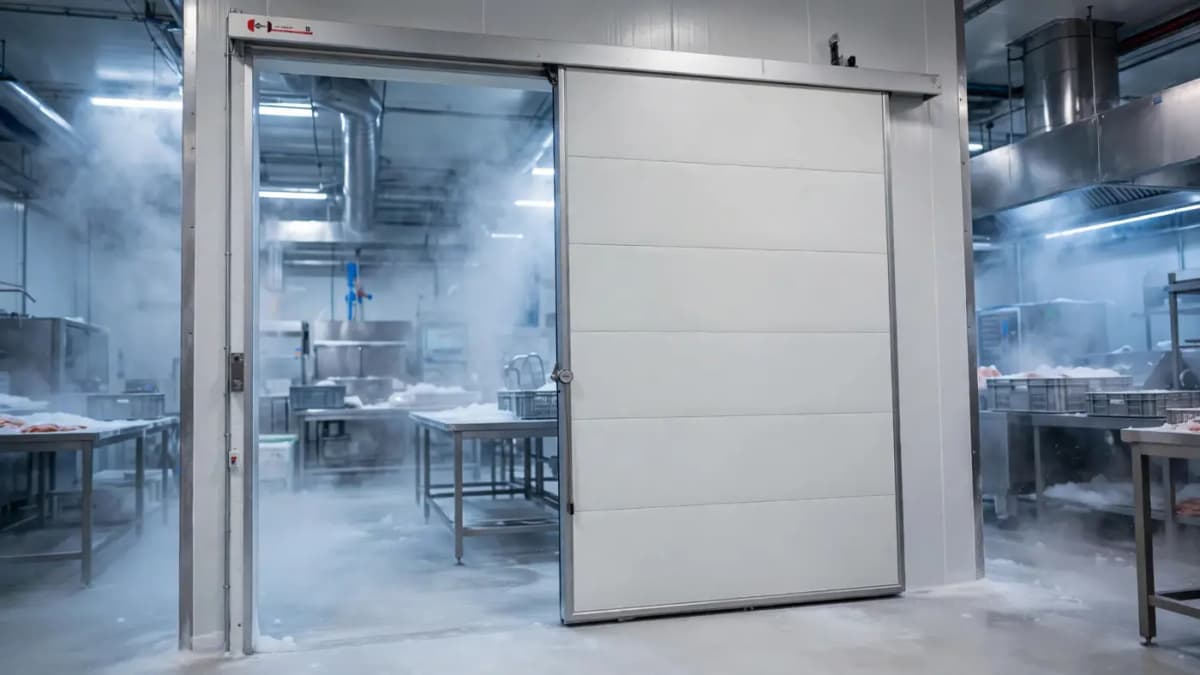
Cold-Chain Doors
Egis BlastShield B170
Heavy-duty blast freezer door rated to -40 C.
Heavy-duty blast-freezer door rated to -40 C with a 170 mm insulated leaf for rapid-chill tunnels and blast cells.
Overview
Blast freezers punish doors: -40 C air, rapid temperature cycling as product loads in warm and freezes fast, and constant forklift traffic. The BlastShield B170 is Egis' answer — a heavy-duty insulated sliding door with a 170 mm high-density polyurethane leaf, heated multi-point gasket system and full frame heating, built to seal at -40 C and keep sealing through blast cycles.
The 170 mm leaf is about thermal mass as much as insulation: it resists the thermal shock of blast cycling without the face distortion that opens gaps in thinner doors. The heated multi-point gasket system seals at several contact lines, so even if one line carries frost, the others hold. Blast-cycle sequencing is available on the automatic drive — the door coordinates with the blast program, holding closed through the freeze phase and releasing for loading on schedule.
Openings run 1200 to 3000 mm wide and 2200 to 3500 mm high, in food-safe coated steel or stainless, with manual or fully automatic operation. Like the rest of the cold-chain range, the B170 is supplied by Egis as a complete installed system across India, commissioned against the room's actual blast regime rather than a generic setting.
Engineering for -40 C and thermal shock
At -40 C, materials change character: steels contract, plastics embrittle, and any moisture in the assembly becomes structural ice. The B170's hardware — track, carriers, rollers, gasket compounds — is specified for -40 C service, not merely rated to it. The heated multi-point gasket is the critical subsystem: multiple heated sealing lines around the perimeter give redundancy that a single gasket cannot, and the heating keeps every line above freezing even as -40 C air washes the leaf.
Blast-cycle sequencing ties the door into the process. A blast freezer's economics depend on holding -40 C through the freeze phase; a door opened mid-cycle by habit or error wastes the cycle's energy. The sequenced drive holds the door closed through programmed phases and releases it for loading windows, with override for safety. The door becomes part of the process control, not just a hole in the wall.
- Rated 0 C to -40 C; 170 mm high-density injected polyurethane leaf
- Heated multi-point gasket system — redundant heated sealing lines
- Full frame and threshold heating for -40 C service
- -40 C-rated track, carriers, rollers and gasket compounds
- Blast-cycle sequencing option ties the door to the freeze program
- Openings 1200–3000 mm W x 2200–3500 mm H; food-safe or stainless finish
Applications
Blast freezing tunnels and rooms
Holds -40 C through freeze cycles in meat, seafood and ready-meal plants.
Ice cream hardening rooms
Thermal-shock-resistant sealing for hardening and storage.
Pharma ultra-low storage
-40 C discipline for frozen bulk pharma and clinical material.
Cold-chain distribution
Heavy-duty freezer doors on high-traffic pallet routes.
In detail
Frequently asked questions
Blast freezing drops product temperature very rapidly using -40 C air at high velocity. The door sees the worst conditions in the cold chain: -40 C air, rapid cycling as warm product loads in, and constant traffic. A standard freezer door's gaskets freeze, its leaf distorts under thermal shock, and its hardware embrittles. The B170 is specified for all three.
It coordinates the door with the blast program: the drive holds the door closed through the programmed freeze phase and releases it for loading windows, with manual override always available for safety. This prevents the energy waste and product-quality risk of mid-cycle openings.
170 mm of high-density injected polyurethane. At -40 C duty the insulation must limit heat gain through the closed leaf while the leaf's thermal mass resists distortion from rapid temperature swings. 170 mm is the engineered balance for this band — thinner leaves distort, thicker leaves become unmanageable mass.
Usually yes, subject to a site survey: the opening structure must carry the heavier leaf and the frame heating needs a power feed. Egis surveys the opening, the blast regime and the traffic pattern before recommending the configuration.
Heater-circuit verification (a failed heater at -40 C cascades fast), gasket-line inspection, and track/carrier checks on cycle count. Egis supplies a -40 C-specific schedule and recommends heater circuits on monitored supplies with fault alarming.
Yes — Egis covers chiller (C80), freezer (F120), blast (B170) and gastight CA (CA200) doors, plus high-speed freezer doors (RF500), so one supplier and one service schedule can cover the entire temperature-controlled facility.
Related door systems
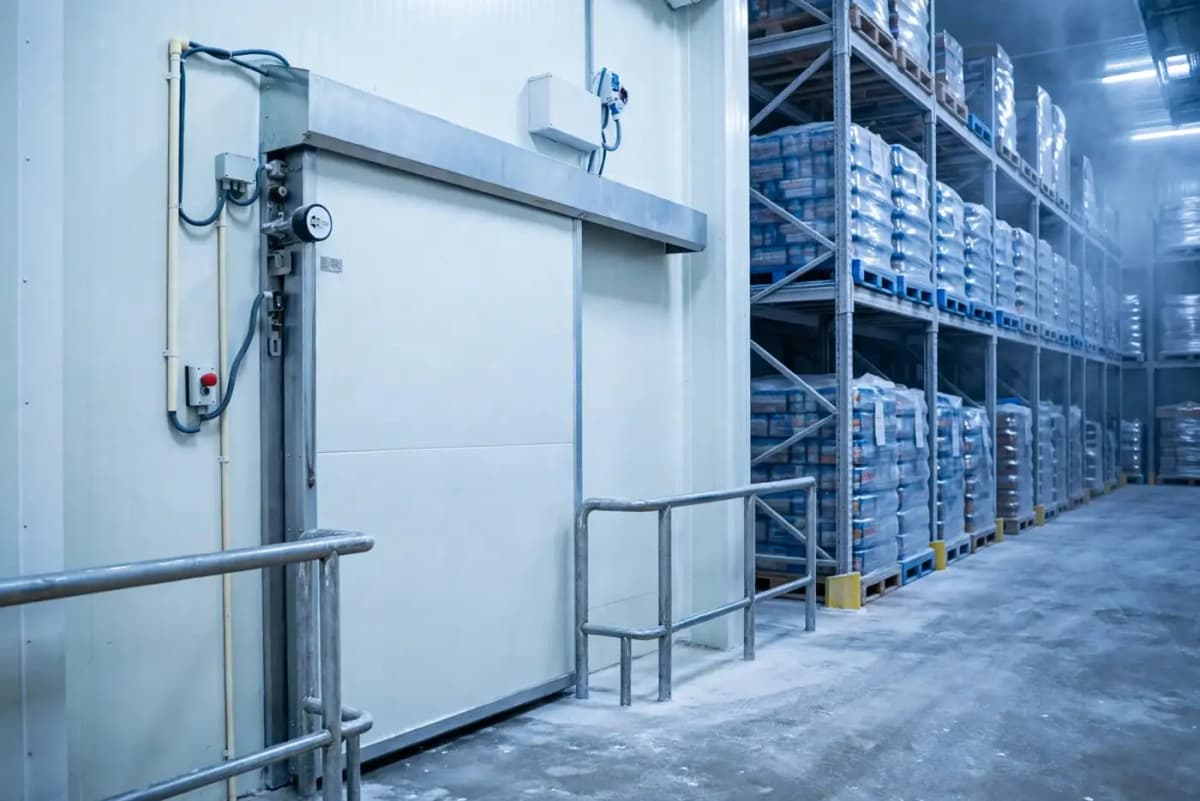
Cold-Chain Doors
Egis FrostGlide F120
- Sliding door system
- Airtight sealing
- Low-temperature duty
- Completely smooth finishing
Insulated freezer sliding door rated to -28 C, with a 120 mm core, heated frame and threshold heating to stop ice build-up.
View specifications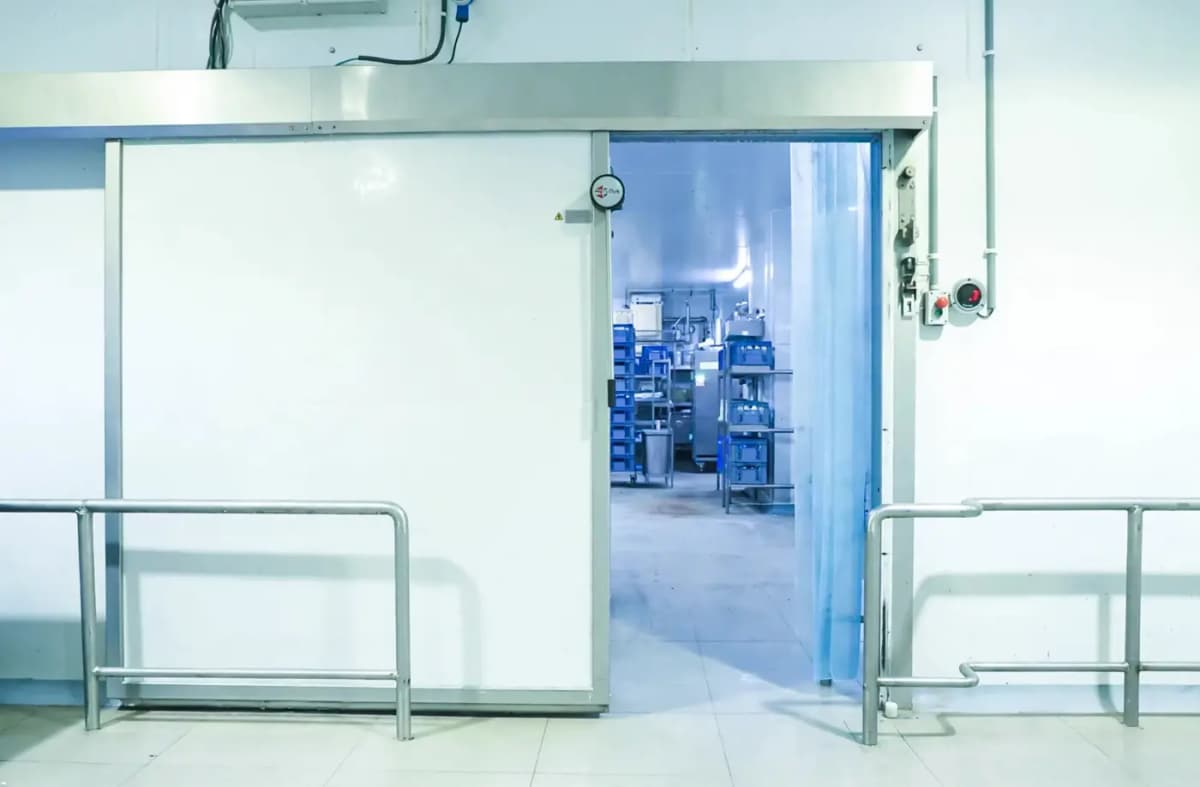
Cold-Chain Doors
Egis ChillGlide C80
- Sliding door system
- Airtight sealing
- Low-temperature duty
- Completely smooth finishing
Insulated sliding door for chiller rooms from 0 to +15 C, with an 80 mm polyurethane core and fast automatic operation.
View specifications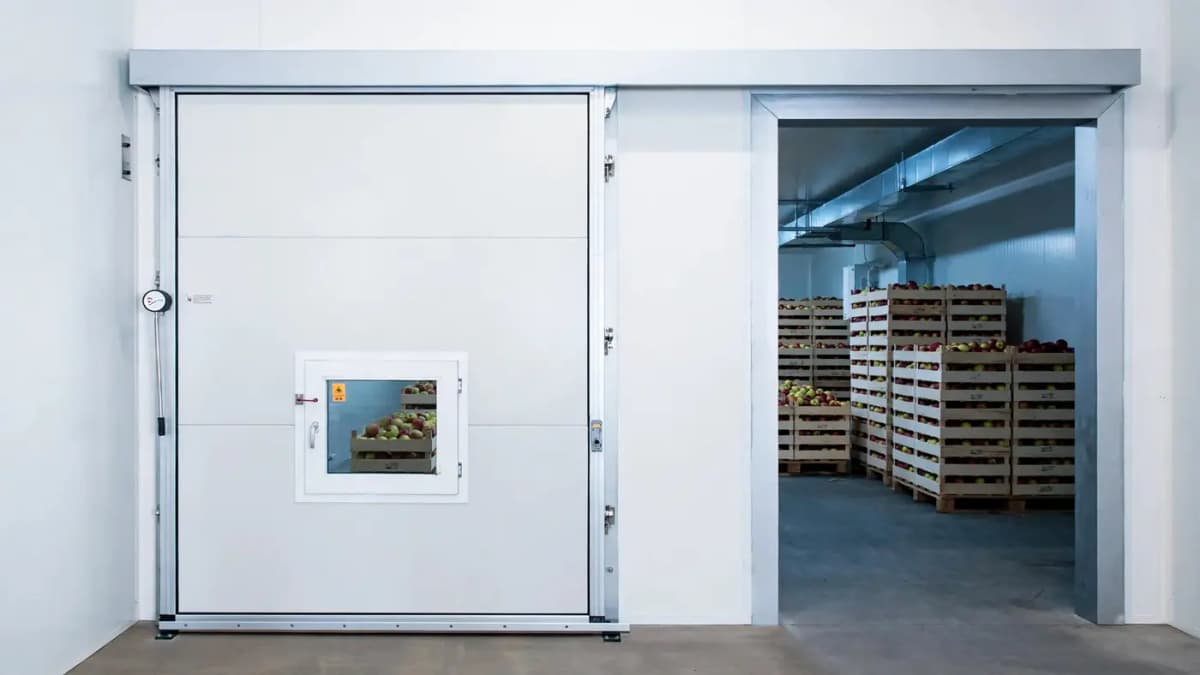
Cold-Chain Doors
Egis GasTight CA200
- Sliding door system
- Airtight sealing
- Gastight sealing
- Low-temperature duty
Gastight sliding door for controlled-atmosphere chambers, with inflatable perimeter gaskets and an integrated inspection and escape hatch.
View specifications